


Baku, November 17, AZERTAC
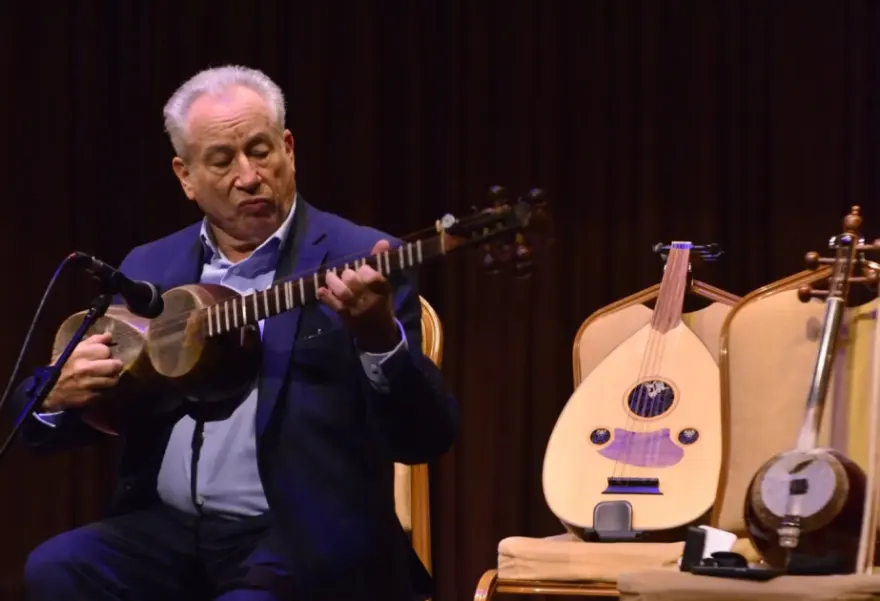
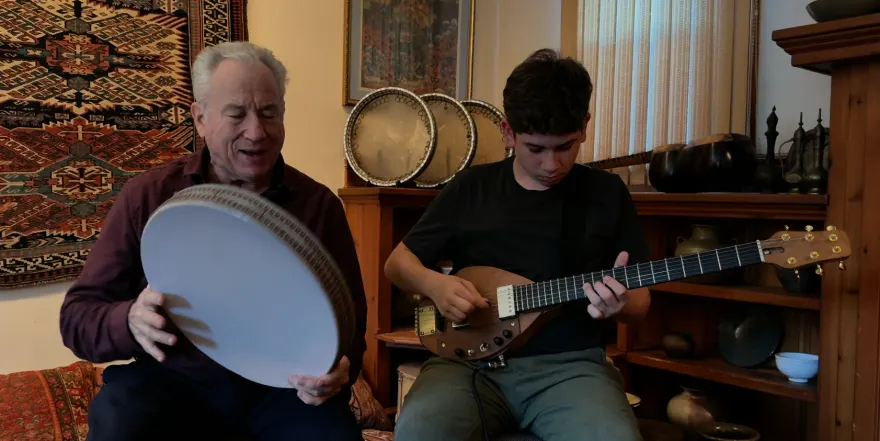
The International Mugham Center recently celebrated the 75th birthday of Jeffrey Werbock, a well-known American musician, chairman of the American Mugham Society, a performer on the kamancha, tar, and oud, a promoter of Azerbaijani music, and a researcher of its history. Jeffrey also studies Azerbaijani culture, traditions, and history, has a keen interest in traditional Azerbaijani carpets, and speaks Azerbaijani fluently. Recently, he has also begun performing alongside his son, Joseph, who has likewise developed a keen interest in Azerbaijani music.
An AZERTAC correspondent spoke with this remarkable musician–an American deeply in love with Azerbaijan.
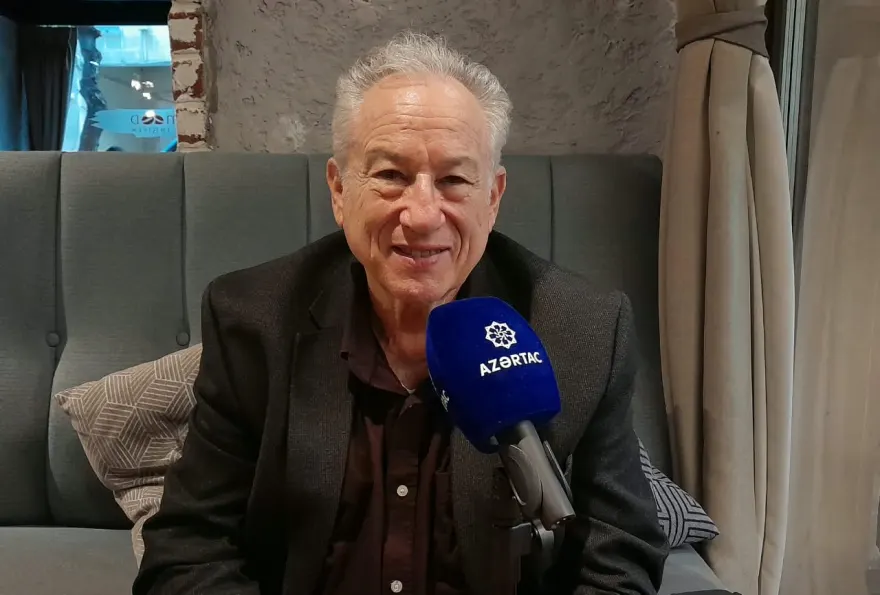
– Jeffrey, you recently came to Baku for a concert celebrating your 75th birthday. How did it go?
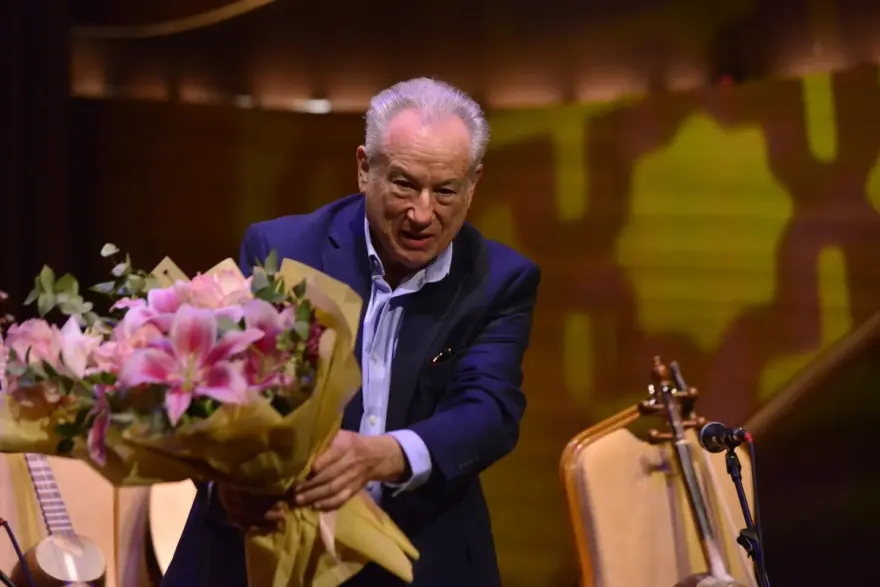
– In my view, everything went wonderfully. It was important to me to put the program together myself. I didn't want the jubilee evening to turn into a succession of long speeches: usually, the guest of honor sits to the side while speakers come up one after another to offer congratulations. I said right away that this wouldn't happen.
Instead of endless speeches, we decided to show my films. One of them is Shusha, My Love (Shusha Sevgilim), dedicated to the liberation of Shusha.
At first, I had some doubts about whether to hold the evening at the International Mugham Center. It has a very large hall, and I was afraid it wouldn't be filled. I prefer the more intimate atmosphere of the Rashid Behbudov Song Theater: it has about 200 seats, wonderful acoustics, and I can perform even without a microphone. But the organizers promised to fill the Mugham Center hall–and they kept their word. There were practically no empty seats left.
The program turned out to be magnificent. The film screening moved the audience deeply: people cried and applauded.
– This was far from your first visit to Azerbaijan. Do you have favorite places in the country and in Baku?
– I first came to Azerbaijan in 1989. Back then, my acquaintances from the Friendship Society took me to Lahij, Baskal, and Shaki. It was a wonderful journey. A lot has changed since then: today, the country has a modern airport and good roads.
In Baku, of course, I love Icherisheher (the Old City). I also like to stay in Yasamal, not far from the National Conservatory. I usually rent an apartment there because I like the atmosphere of the neighborhood. I prefer staying in an apartment rather than a hotel because I like to cook for myself and need a kitchen.
As for Azerbaijan as a whole, my favorite places right now are Shusha and Khankendi. After the Kharibulbul festival in May, I visited Khankendi, where I met kamancha teacher Elshan Mansurov. I showed my film, played the kamancha, and performed for students and staff at the university. The head of the music school even suggested that I move to Khankendi one day and teach my style of mugham there. I was very pleased to hear that.

– You recently performed for people with special needs at the Camphill community Copake, New York State. How did they respond to your music? More broadly, how important is it to organize such concerts?
– I was especially touched by the way they listened. At first, my son was a little disoriented because he noticed that these people looked different from most of us. But on the way home, he said, “Dad, I understand: they look like adults, but actually they are children.” He recognized their sincerity and spontaneity.
My wife was surprised. On the way to the event, she wondered whether the audience would be able to sit quietly and listen attentively to the music. But after the performance, she said it was the best audience she had ever seen: people sat quietly for an hour and a half and listened very attentively. Someone even danced.
I also have a personal history connected with Camphill. Many years ago, I often went there to visit the stepbrother of a close friend. These trips became an important part of my life. So returning there was a very touching and nostalgic experience.
I am convinced that exposure to culture, music, art, and dance can have a positive impact. It is important to create a suitable environment for people who need special care, where they can feel at ease and develop their abilities. In my view, this is precisely what makes such encounters valuable.

– Your son Joseph has recently started performing with you. How did he become interested in Azerbaijani music?
– Joseph, of course, heard me playing at home, but for a long time he showed practically no interest in music. Everything changed when American musician Gabriel Marin called me and asked me to teach him Azerbaijani mugham. He was already studying various Eastern musical traditions and wanted to learn mugham as well.
Gabriel planned to play the guitar, so I bought an instrument and began working out how to perform mugham on the guitar so I could teach him. Then my son, who was eight years old at the time, unexpectedly declared, “I want to play the guitar too!”
At first, I taught him simple melodies he already knew. Gradually, he got the hang of it and asked me on his own, “Dad, teach me to play Azerbaijani music.” It was entirely his initiative. We started with a few melodies and began playing as a duet. Joseph picked everything up surprisingly quickly. Since a regular guitar was too big for him, I made a few instruments with smaller bodies, and my son chose the one he liked.
Later, Parvin Hajiyeva, who was preparing a concert at Carnegie Hall to mark composer Jovdet Hajiyev’s jubilee, saw a video of our joint performance online and invited Joseph to perform Azerbaijani music. For his solo performance, he needed to master mugham. My son asked me to teach him, and I began working with him on the Bayati-Shiraz dastgah. He learned the entire piece.
Before Carnegie Hall, I wanted to see how Joseph would handle performing on stage. First, we performed together at the University of Pennsylvania, and then I suggested that he play on his own. He went out alone and performed Bayati-Shiraz. The audience was thrilled. I realized he was ready for a solo performance.
– When can we expect you back in Azerbaijan? Are you perhaps planning to perform here with Joseph?
– There are no specific dates for my next visit yet. I have already been to Azerbaijan twice in 2026–in May and October–so I hadn't planned to return again before the end of the year.
As for Joseph performing in Azerbaijan, nothing has been planned yet. But if people want to see us here, we will gladly come. I am always ready to come to Azerbaijan. I love this country very much.
...If you ask me why I feel this way about Azerbaijan, I cannot answer. I don't know. People used to constantly try to find an explanation. They would say, “You must have been an Azerbaijani in a past life.” But I am an educated person and consider that idea rather absurd, although many people believe in it. And you know what I don't like about it? I really dislike it when my love for Azerbaijan is explained that way.
This is my love. My own feelings. I don't want anyone to attribute them to another person who supposedly lived before me. These are my feelings. Don't take them away from me. Don't say, “You must have been an Azerbaijani in a past life.” Or explain everything through genetics: “You must have Turkish roots.” You don't need to reduce everything to genetics. Even if a person has some distant ancestor from this region, what does that have to do with their feelings?
Do not take away my love for your country, your culture, and your people. Do not try to explain it by some external cause. It needs no explanation. It is my love, and I want to keep it just the way it is.
